
He said it will be 'foolhardy' to diminish institutions for short-term political gains.

'Consolidation was part of the Indradhanush package.'

The RBI cited lower-than-expected inflation, weak crude prices and weak demand, as well as the government's commitment to sticking to a fiscal deficit target as reasons.
The non-oil, non-finance sector of the economy is under severe stress.
Reform ideas do not occur overnight and evolve over the years.

National artificial intelligence unit stuck for lack of anchor department

The executive order, which was signed by Trump on Thursday, prohibits certain purchases involving publicly traded securities or any securities that are derivative of or are designed to provide investment exposure to such securities of any Communist Chinese military company.

The government has at last commenced important structural reforms.

If oil prices rise, the government would face an uncomfortable political decision.
Special Economic Zones are likely to be central to realising Prime Minister Narendra Modi's ambitious Make in India agenda.

What is required from government is intellectual framework.

After the Gujarat and Himachal elections and the municipal polls in Mumbai and Delhi, Karnataka, Rajasthan, MP and Chhattisgarh will elect new assemblies next year leading up to the Lok Sabha election in April-May 2024, points out Virendra Kapoor.

The World Bank's executive board unanimously selected 63-year-old Malpass, who is currently Under Secretary of Treasury for International Affairs, as the bank's 13th President for a five-year term beginning April 9.
He said the 'toxic combination of deep distrust, pervasive fear and a sense of hopelessness in our society' is stifling economic activity and growth.

Joe Biden's B3W proposal aims to bring democracies together. India should come up with its own plans to contribute to the initiative, states Rahul Mishra.
Shortage of semiconductors, price hikes pull January auto sales into red. Dec had seen sales grow for 1st time this FY, which dealers called a one-off.

Double tax exemption on wages paid to women can encourage companies to hire, retain and compensate women better, argues Nitin Pai.

Watal panel had suggested an independent payments regulator be set up.

The notes argue that it will widen the talent base available to govt to deliver increasingly complex services to a demanding population.

Three experts on cyber security, digital forensics, networks and hardware were roped in by the Supreme Court on Wednesday to "enquire, investigate and determine" whether Pegasus spyware was used for snooping on citizens and their probe would be monitored by former apex court judge R V Raveendran.

'The question is really can we prevent half a million deaths.' 'We are fast approaching that number.'

Colombo seems to be veering to the middle path between China and the US on global matters, but in regional matters of strategic security, it is increasingly identifying with India, points out N Sathiya Moorthy.

The Pay Commission process is symptomatic of a national crisis within the Indian state.
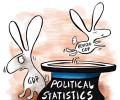
There has been criticism of the official statistics ever since MoSPI came out with new methodology to estimate the GDP on the base year of 2011-12 compared to earlier 2004-05.
James Wilson explains why Indians are destined to silently suffer the cash shortage for half a dozen more months.

It is time to take a few macroeconomic risks to kick start the growth.
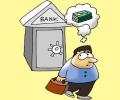
The provisions in the FRDI bill do not modify current protections for depositors adversely at all, the ministry held, maintaining that these rather provide additional protections in a more transparent manner.

The Budget would have been the perfect vehicle to introduce some bold initiatives.
That opportunity has been lost through this Budget, observes Shreekant Sambrani.
This is a terrible situation for a growing economy to be in, and the central bank would be expected to act to correct the situation.

Creating many more half-decent jobs for the 10 million plus new entrants to the labour force each year must surely constitute the primary development challenge for India today.

Ramesh Menon, the veteran journalist suggests Prime Minister Narendra Damodardas Modi what he should do if he wants to win 2024 Lok Sabha elections.

Courts in five countries including the US and the UK have given recognition to an arbitration award that asked India to return $1.4 billion to Cairn Energy plc - a step that now opens the possibility of the British firm seizing Indian assets in those countries if New Delhi does not pay, sources said. Cairn Energy had moved courts in nine countries to enforce its $1.4 billion arbitral award against India, which the company won after a dispute with the country's revenue authority over a retroactively applied capital gains tax. Of these, the December 21 award from a three-member tribunal at the Permanent Court of Arbitration in the Netherlands has been recognised and confirmed by courts in the US, the UK, Netherlands, Canada and France, three people with knowledge of the matter said.

'Instead of doing reforms and restructuring, the present government is busy with the perception that everything is fine and the economy is hunky-dory.' 'Such hollow perceptions are very dangerous for the Indian economy in the long run.' 'The real risk to India is the lack of decent employment opportunities for youth in general and educated youth in particular.'

'The Swedish government would consider who will live, who will not die, in rationing coronavirus healthcare!' 'This means the 'biological age' would supersede the patient's chronological age as a potential guideline,' notes Ambassador M K Bhadrakumar

Policy lays out a 5-year road map seeking creation of 3.5 mn jobs and promoting 10,000 start-ups.

His likable boy-next-door face and casual approach to public speaking have a unique appeal for the younger generation, but it stops there, observes N Sathiya Moorthy.
India could gain four times over by winding up dysfunctional subsidies.
'The experience so far is a shocking example of how critical scheme of national importance can be brought into disrepute by inefficient and badly designed implementation,' says Dr Madhav Godbole, the former Union home secretary.

'The shadow banks are currently facing a liquidity and solvency crisis.' 'The danger is that it could potentially engulf the entire financial system because shadow banks have borrowed huge amount of money from banks, mutual funds, pension funds, and insurance companies.'

The demand for OROP has been projected as an unambiguous issue but a good policy argument must have a sound economic element.
 © 2026 Rediff.com - Advertise with us - Disclaimer - Privacy Policy - Sitemap - Feedback - About us - Terms of use - Grievances